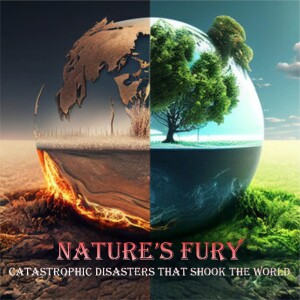
Nature’s Fury: Catastrophic Disasters that Shook the World
This podcast explores the most devastating natural disasters in human history, delving into how these catastrophic events reshaped the world. Each episode presents a deep dive into specific disasters, examining their causes, the immense destruction they caused, and the emotional and social aftermath. Listeners will experience a blend of factual storytelling and powerful, heart-wrenching human experiences to better understand the terrifying power of nature.




Episodes
2 hours ago
2 hours ago
7 min
Between December 1811 and February 1812, a series of powerful earthquakes struck the central Mississippi Valley near New Madrid, Missouri. The shaking was felt across much of the eastern United States, while communities near the epicentral region experienced collapsing riverbanks, ground fissures, landslides, and widespread liquefaction.
The earthquakes dramatically reshaped the landscape. Sand and water erupted from the ground, sections of land rose or sank, and Reelfoot Lake formed in Tennessee. Sudden deformation of the Mississippi River produced waves and temporary upstream movement that led witnesses to describe the river as flowing backward.
Despite the enormous physical effects, the confirmed death toll was relatively low because the region was sparsely populated at the time. Today, however, millions of people, major transportation routes, pipelines, bridges, and critical infrastructure lie within the broader New Madrid Seismic Zone.
The disaster remains a powerful reminder that major earthquakes are not limited to active plate boundaries. Ancient faults deep within continental interiors can still generate destructive events, making long-term preparedness essential even in regions that may remain quiet for generations.
Oct 19, 2026
Oct 19, 2026
7 min
In October 2010, Indonesia’s Mount Merapi entered its most powerful eruption in more than a century. Explosions, collapsing lava domes, ashfall, and fast-moving pyroclastic flows threatened densely populated communities on the volcano’s slopes.
The disaster killed around 386 people and forced more than 300,000 residents to evacuate at the height of the crisis. Villages, farms, roads, bridges, and livestock were damaged, while later rainfall triggered destructive lahars that extended the danger well beyond the main eruption.
Despite the heavy losses, scientific monitoring and repeated expansions of evacuation zones saved many thousands of lives. Seismic activity, ground deformation, and changes at the summit gave authorities critical warning before the largest pyroclastic flows occurred.
The 2010 eruption became a major lesson in volcanic preparedness. It showed that hazard zones must remain flexible, warnings must be trusted, and communities living near active volcanoes need clear evacuation plans, strong communication, and continued vigilance even after the main eruption begins to weaken.
Oct 11, 2026
Oct 11, 2026
8 min
In October 1999, a super cyclone struck India’s eastern state of Odisha near Paradip with winds of around 260 kilometers per hour. A massive storm surge, intense rainfall, and prolonged winds devastated coastal districts and flooded large areas far inland.
About 9,885 people were killed, millions were affected, and vast numbers of homes, crops, livestock, roads, and public facilities were destroyed or damaged. Many communities were isolated for days, while contaminated water, food shortages, and damaged infrastructure created a severe humanitarian crisis.
The disaster exposed major weaknesses in cyclone shelters, evacuation planning, communication, and emergency coordination. It also demonstrated how storm surge can be as deadly as extreme wind, especially across flat and densely populated coastlines.
In the years that followed, Odisha transformed its disaster preparedness system by building cyclone shelters, improving warnings, training local volunteers, and organizing large-scale evacuations. The 1999 cyclone became a lasting lesson that powerful storms cannot be stopped, but far better preparation can dramatically reduce the loss of life.
Oct 5, 2026
Oct 5, 2026
8 min
In 1669, Mount Etna produced one of the largest and most destructive eruptions in its recorded history. Earthquakes preceded the opening of new vents on the volcano’s southern flank, and enormous lava flows began advancing toward villages, farmland, and the city of Catania.
Over four months, the eruption buried several settlements, destroyed vineyards, roads, churches, and homes, and displaced thousands of people. The lava eventually reached Catania and then entered the Mediterranean, creating new land along the coastline. Despite the immense destruction, reliable evidence does not support later claims of massive direct loss of life.
The disaster showed how dangerous flank eruptions can be when vents open at low elevation close to populated areas. It also demonstrated that slowly moving lava can cause catastrophic economic and social damage even when residents have time to escape.
Today, Etna is one of the most closely monitored volcanoes in the world. The 1669 eruption remains a lasting lesson in volcanic preparedness, land-use planning, evacuation, and the challenge of living beside a volcano that continues to reshape Sicily.
Sep 28, 2026
Sep 28, 2026
8 min
In 1931, catastrophic flooding affected large parts of China, including the northeastern river systems connected to the Heilongjiang, or Amur, River. Although the Yangtze and Huai floods became far better known, communities across the northeast also endured rising rivers, submerged farmland, damaged transport routes, and widespread displacement.
Historical records for the Black Dragon River region are incomplete, so the exact death toll cannot be stated with confidence. What is clear is that homes, crops, livestock, roads, and local economies suffered heavily, while contaminated water, food shortages, and isolation created further hardship for survivors.
The flooding was caused by an exceptionally wet year in which repeated storms, saturated ground, seasonal runoff, and swollen tributaries combined across multiple river basins. The disaster unfolded amid political instability in Manchuria, making relief and documentation even more difficult.
The 1931 northeastern floods showed why flood disasters must be understood across entire river systems, not as isolated local events. Their lasting lesson is that extreme weather can affect distant regions at the same time, and that effective forecasting, basin-wide planning, resilient infrastructure, and international cooperation are essential in managing large transboundary rivers.
Sep 21, 2026
Sep 21, 2026
9 min
In November 2008, Colombia’s Nevado del Huila erupted after months of renewed volcanic unrest. Explosive activity and the collapse of part of the summit area melted glacier ice and generated massive lahars that rushed down the Páez River system.
The mudflows destroyed bridges, roads, farmland, homes, and public infrastructure across downstream communities. Around ten people were killed, while thousands were evacuated and more than eight thousand people were affected directly or indirectly.
Despite the scale of the lahars, the death toll remained relatively low because monitoring systems, warning networks, evacuation plans, and local community action allowed many residents to reach higher ground before the flows arrived.
The disaster became an important lesson in volcanic risk management. Nevado del Huila showed that volcanoes can threaten communities far from the crater through rivers and valleys, and that scientific monitoring combined with trusted local warnings can save thousands of lives.
Sep 14, 2026
Sep 14, 2026
9 min
In September 1926, a powerful Category 4 hurricane struck South Florida directly, bringing destructive winds, storm surge, flooding, and widespread structural damage to Miami and surrounding communities. Many residents were unfamiliar with major hurricanes, and some were dangerously caught outside when the calm eye passed over the city.
Several hundred people were killed across the United States, thousands were injured, and tens of thousands were left without adequate shelter. Property damage exceeded 100 million dollars at the time, making the storm one of the costliest American disasters of its era.
The hurricane struck just as South Florida’s speculative real estate boom was already weakening. It did not cause the collapse by itself, but it accelerated falling confidence, reduced investment, and exposed the vulnerability of rapidly developed coastal communities.
The disaster became an important lesson in hurricane preparedness, stronger building practices, public warning systems, and understanding storm surge. It also showed that economic growth cannot remove natural risk, and that rapidly expanding cities must prepare for hazards long before disaster returns.
Sep 7, 2026
Sep 7, 2026
9 min
In 2010, exceptionally heavy monsoon rains triggered catastrophic flooding across Pakistan. Flash floods struck the mountainous north before the swollen Indus River carried the disaster south through Punjab and Sindh, inundating vast areas of farmland and settlements.
Nearly 2,000 people were killed, around 1.9 million homes were damaged or destroyed, and more than 20 million people were affected. Crops, livestock, roads, bridges, irrigation systems, and basic services suffered enormous losses, while millions faced displacement, contaminated water, disease risks, and prolonged economic hardship.
The disaster showed how extreme rainfall becomes far more destructive when combined with vulnerable settlements, weak infrastructure, limited drainage, and dependence on floodplain agriculture. Rescue and relief efforts involved Pakistani authorities, the military, local communities, and international organizations.
The 2010 floods became a major lesson in disaster preparedness. They reinforced the need for stronger forecasting, better evacuation planning, resilient infrastructure, improved flood management, and long-term policies that reduce human exposure to increasingly severe hydrological disasters.
Aug 31, 2026
Aug 31, 2026
8 min
In 1792, volcanic unrest and powerful earthquakes destabilized Mount Mayuyama near Japan’s Unzen volcanic complex. A massive section of the mountain collapsed into the Ariake Sea, generating a devastating tsunami.
The disaster killed roughly 14,000 to 15,000 people, making it the deadliest volcanic disaster in Japanese history. Villages were buried or swept away, boats and farmland were destroyed, and communities around the bay suffered catastrophic losses.
The tragedy revealed that volcanoes can be deadly in ways far beyond lava and ash. Landslides, earthquakes, and tsunami can combine into a chain of hazards, each making the next more destructive.
Today, Unzen remains an important lesson in volcanic monitoring and disaster preparedness. Its history shows why scientists must study not only eruptions, but also unstable slopes, ground movement, and the wider landscape surrounding active volcanoes.
Aug 24, 2026
Aug 24, 2026
9 min
In December 1952, a deadly combination of cold weather, coal smoke, industrial pollution, and a temperature inversion trapped a thick toxic smog over London for five days. Visibility dropped to only a few feet in some areas, transportation nearly stopped, and polluted air entered homes, hospitals, theaters, and public buildings.
The smog contained high concentrations of sulfur dioxide, soot, and acidic particles, causing severe respiratory problems, especially among infants, elderly people, and those with heart or lung disease. Initial estimates suggested around 4,000 deaths, but later studies concluded that as many as 12,000 people may have died, with tens of thousands more becoming seriously ill.
The catastrophe forced Britain to recognize air pollution as a major public health threat rather than simply an unpleasant part of industrial life. It helped lead to the Clean Air Act of 1956, which introduced smoke-control measures, cleaner fuels, and tighter regulation of industrial emissions.
The Great Smog of London remains a landmark environmental disaster, showing that catastrophe does not always arrive through fire, water, or earthquakes. Sometimes the deadliest danger is simply the air people can no longer safely breathe.